



The Truth About Chondroitin
In this blog, I’d like to summarize the scientific facts about chondroitin—a topic surrounded by a mix of true and false information—based on the latest research findings.

Index
~ Why High-Molecular-Weight Chondroitin Sulfate Is Ineffective
First, what exactly is chondroitin? Let’s review a few points.
1. The official name for chondroitin is “chondroitin sulfate.”
2. Chondroitin sulfate is a “glycan.”
3. Chondroitin sulfate is found in high concentrations in cartilage, but it is present in nearly every part of the body.
4. Chondroitin sulfate cannot be broken down by enzymes produced by the human digestive system.
5. Chondroitin sulfate has a chain-like structure formed by alternating bonds between glucuronic acid and sulfated N-acetylgalactosamine.
6. Chondroitin sulfate is a component unique to animals and is not found in plants.
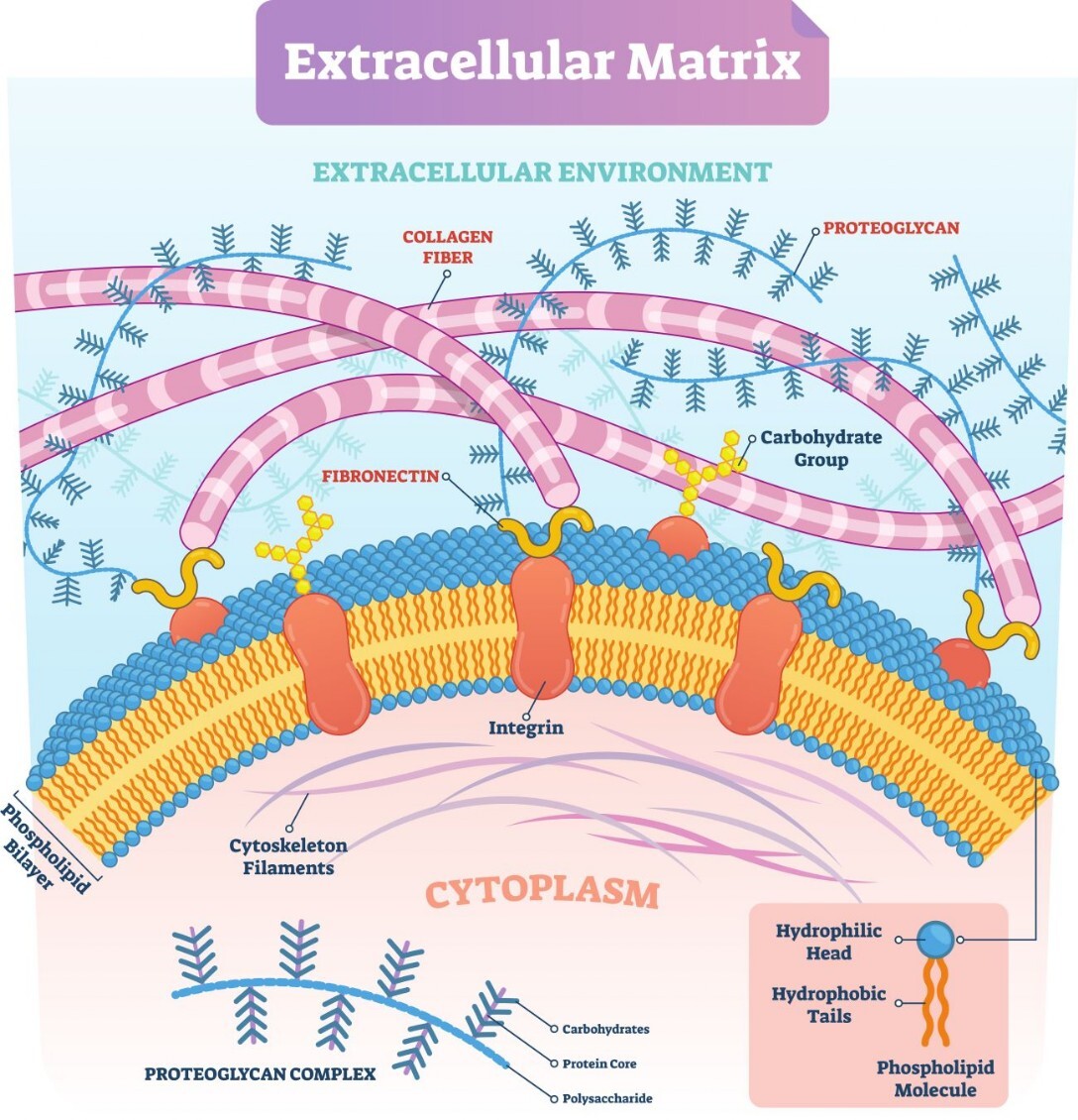
7. In the body, chondroitin sulfate exists bound to proteins; this is academically referred to as proteoglycan.
8. Chondroitin sulfate is typically a high-molecular-weight substance with a molecular weight ranging from tens of thousands to over a hundred thousand.
Introduction: An Ingredient That Goes Far Beyond Pharmaceuticals: Oligosaccharide Chondroitin Sulfate
You’ve probably heard the term “chondroitin” quite often. Even before it became widely used as a dietary supplement as it is today, chondroitin was used as a pharmaceutical drug.
However, precisely because of its long history, the pathways—specifically the pharmacokinetics and mechanism of action—through which chondroitin (chondroitin sulfate), which is supposed to be a pharmaceutical drug, is absorbed and acts in the body when administered orally (when ingested) remained unclear.
At the time, molecular biological research methods such as real-time PCR and microarrays did not exist, nor were there analytical instruments capable of detecting extremely trace amounts of components, so one could say this was unavoidable.
Nowadays, however, genetic analysis technologies and analytical techniques such as LC-MS/MS have advanced significantly, leading to extensive research into the pharmacokinetics and mechanism of action of the chondroitin (high-molecular-weight chondroitin) traditionally used.
As a result, it has been found that conventional chondroitin (high-molecular-weight) is essentially neither digested nor absorbed when ingested. Since the human digestive system does not secrete enzymes capable of breaking down chondroitin, this is, of course, an inevitable outcome.
Unfortunately, chondroitin (chondroitin sulfate), which is supposed to be a pharmaceutical, is likewise neither digested nor absorbed. The fact that it is neither digested nor absorbed means it does not enter the bloodstream or reach cells throughout the body. In other words, it cannot exert any direct effects.
However, the “chondroitin sulfate oligosaccharide” developed by our company is different.
When taken orally, it is absorbed through the small intestine, enters the bloodstream, and reaches cells throughout the body. Only upon reaching the cells does it begin to exert its various physiological activities.
Without exaggeration or bias, and speaking purely from a scientific standpoint, chondroitin sulfate oligosaccharides are a compound that far surpasses conventional pharmaceutical chondroitin (high-molecular-weight).
I have documented the various challenges involved in the development of this chondroitin sulfate oligosaccharide, so I hope you will take the time to read on.
Chapter 1: Chondroitin Sulfate to Date (Previous Generation)
There are numerous studies on the efficacy of chondroitin. For example, there is the “NIH Public Access Author Manuscript: Osteoarthritis Cartilage,” compiled by the U.S. National Institutes of Health (NIH) in 2011.
This paper concludes that chondroitin is not effective.
Regardless of this specific paper, it is a fact that many studies have concluded that chondroitin is not effective.
The “Information on the Safety and Efficacy of Health Foods” (National Institute of Nutrition and Health) also states, “No evidence of efficacy has been found.”
Consequently, the view that “taking chondroitin is pointless” has emerged, which is understandable given the scientific papers published to date.
So why have these results emerged?
The answer is that all of these studies used chondroitin that is not absorbed.
Chondroitin is a macromolecule that cannot be broken down by human digestive enzymes, so it is not absorbed through the intestinal tract.
It is only natural that taking something that is not absorbed would have no effect.
It’s only natural that taking a headache pill would have no effect if it isn’t absorbed, right?
Why has such an obvious fact been ignored by scientists for so long?
In reality, it may not be that they ignored it, but rather that “they couldn’t do anything else, so that was their only option.”
Of course, sensible scientists tried to find a solution, but they were unable to do so.
A group of sugar chains known as glycosaminoglycans—such as chondroitin and hyaluronic acid—cannot be broken down by the digestive enzymes produced by the human digestive system; however, certain microorganisms, such as bacteria, possess an enzyme called chondroitinase that can digest them.
Technologies for breaking these down into low-molecular-weight compounds using bacterial chondroitinase were widely employed in laboratories. However, producing this enzyme was extremely costly, making it impractical for industrial production.
Furthermore, methods such as acid hydrolysis and photocatalysis were also researched, but for various reasons, these could not be industrialized either.
As such, because reducing the molecular weight of chondroitin proved extremely difficult, the idea of administering a low-molecular-weight form of chondroitin (chondroitin sulfate oligosaccharides) to humans seemed like a pipe dream.
Although chondroitin sulfate oligosaccharides were available as research reagents, they were so expensive—costing 16,000 yen for just 1 mg (or 160 billion yen per kilogram!)—that it was simply impossible to conduct research involving administration to humans.
For example, if a study were to administer 10 mg per day to humans for one month, the cost would be 10 mg × 30 days × 16,000 yen = 4,800,000 yen. If this were conducted with 10 people in the treatment group and 10 in the placebo group (a total of 20 people), the research costs for the reagents alone would amount to 96 million yen.
Furthermore, even if we somehow managed to raise the funds and conduct the research and development, the business would not be viable unless we could achieve mass production.
This is the primary reason why research into the efficacy of chondroitin has not progressed, and why we were forced to conduct studies using high-molecular-weight chondroitin, which is not absorbed by the body.
Another important factor was the perception that “chondroitin seemed like an ingredient that might be effective,” leading to the assumption that even if it wasn’t absorbed, it might still demonstrate some efficacy.
Cartilage tissue in living organisms is truly mysterious, and the extremely viscous substance extracted from the cartilage of sharks, whales, and cows was compelling enough to suggest that it must possess some kind of beneficial effect.
Furthermore, in recent years, tests at the cellular level using high-molecular-weight chondroitin sulfate have begun to be conducted. Combined with advances in analytical technology, the demonstration of various beneficial effects on cells has also bolstered research into chondroitin sulfate.
Consequently, although massive amounts of research funding—from both public and private sectors—were poured into chondroitin sulfate research around the world, as mentioned at the beginning, the results ended up being ambiguous, neither clearly positive nor negative.
*Note
There is a valid reason why the results ended up being ambiguous.
The key factors are “dosage determination” and “differences in gut microbiota.”
“Dosage Determination”
High-molecular-weight chondroitin sulfate that is not absorbed in the small intestine reaches the large intestine and serves as food for gut bacteria. If the amount is small enough for the gut bacteria to consume, the breakdown products of the high-molecular-weight chondroitin sulfate will not be absorbed.
However, if a large amount of high-molecular-weight chondroitin sulfate—too much for the gut bacteria to consume—is sent from the small intestine, the breakdown products produced by the gut bacteria may be reabsorbed into the bloodstream along with water reabsorbed from the large intestine.
The breakdown products of intestinal bacteria primarily refer to unsaturated chondroitin sulfate disaccharides (Δdi-CS).
Therefore, if the dosage set in that experiment was too low, it would not produce an effect; however, if the dosage was excessive, it may have been absorbed in the large intestine, which could explain the observed effect.
“Differences in the Intestinal Microbiota”
It is well known that the gut microbiota varies from person to person. Consequently, even with the same dosage, the effect will differ between individuals who have a large number of gut bacteria capable of breaking down high-molecular-weight chondroitin sulfate and those who have few.
In other words, if the experimental dosage is set at “500 mg/day/person,” it is possible that one person’s gut microbiota can completely break down the chondroitin sulfate into disaccharides, while another person’s cannot break it down at all.
Chapter 2: Does Taking Chondroitin Actually Reach the Cartilage ???
There is a lot of misinformation on the internet.
Recently, I came across a PR page for a certain company’s product that made the utterly unscientific claim: “Take proteoglycan, and its ingredients will be delivered to your cartilage!”
Previously, a well-known researcher made a critical remark about the efficacy of supplements, asking, “If you eat hair, will it grow back? (Of course not.)”
Semantically, this is entirely correct—eating hair won’t magically turn into hair. However, this scientist is making a major misunderstanding. To begin with, supplements (food ingredients) are not at all on the same level as “eating hair = growing hair,” “eating skin = becoming skin,” or “eating an eyeball = becoming an eyeball.”
As I’m sure you’ve all realized, if eating an eyeball could create a new one, we wouldn’t need regenerative medicine at all (lol).
The reason such a ridiculous idea comes up is that everyone, including the scientist mentioned earlier, has forgotten about “digestion and absorption.”
All living organisms digest what they eat, break it down into molecular-sized particles, absorb it, and then send it to various organs within the body to be utilized.
If it isn’t broken down into small particles, it simply cannot be delivered to every corner of the body via the bloodstream. By reconstructing the absorbed molecules, living organisms can create the molecules they need, each with various functions.
It’s the same as with LEGO blocks: the smaller they are, the more shapes you can build.
For example, excluding metals, there are only about six types of atoms that make up living organisms (hydrogen H, nitrogen N, carbon C, oxygen O, phosphorus P, and sulfur S). However, the number of molecules that can be created from these is infinite, depending on the permutations and combinations of the atoms.
Furthermore, since ordinary molecules are sufficiently small, their permutations and combinations can, in principle, create an infinite variety of materials.
However, once something has become muscle or bone (a macromolecule), it cannot be reconstructed unless it is first broken down into smaller pieces.
In other words, macromolecules can only be reused after undergoing the process of digestion and absorption.
(Reuse refers to the process by which food is converted into energy or used to build the body.)
So, what is the size of food?
For example, the smallest unit of rice is a single grain, but it cannot be absorbed as is. Therefore, we first physically break it down by chewing it with our teeth. Next, the amylase in saliva digests the starch contained in the rice, chemically converting it into smaller, water-soluble molecules such as maltose and dextrin.
Even at the molecular level, sizes vary widely from macromolecules to small molecules.
They range from proteins with molecular weights of several million to monosaccharides and amino acids with molecular weights of a few hundred, and minerals with molecular weights of a few dozen.
Incidentally, the molecular weight of water is only 18.
So, what is the size of molecules absorbed by the gastrointestinal tract?
It’s hard to generalize, but they are generally 1,000 or fewer in size; molecules larger than 10,000 are not absorbed, except in special cases.
This may sound like a roundabout way of putting it, but large-molecule substances such as chondroitin sulfate, hyaluronic acid, and proteoglycans cannot be digested or absorbed by the digestive enzymes produced by the human body.
Addendum
Hair is composed of a protein called keratin, but the human digestive system does not secrete keratinase, the enzyme needed to digest it. Therefore, hair is hardly digested or absorbed at all.
When you get right down to it, all food components are chemical substances—aggregations of various molecules. These molecules can be classified into several types based on their characteristics.
The major categories are proteins, lipids, carbohydrates, and inorganic salts (minerals), with nucleic acids also included.
Among these, some are interchangeable, while others are not. Proteins can be converted into carbohydrates, and carbohydrates into lipids, and so on.
However, the non-interchangeable ones are essential nutrients, and must be consumed to replenish them.
Well-known examples of non-interchangeable nutrients include essential amino acids, certain vitamins, and minerals.
Chapter 3: The New Generation of Absorbable Chondroitin Sulfate: The Emergence of Chondroitin Sulfate Oligosaccharides
You often see data in advertisements claiming, “Test results from cell studies showed effectiveness.” While those results themselves may not be incorrect, think about it carefully. In the human body, the processes of digestion and absorption are necessary for any substance to reach the cells. No matter how wonderful a substance may be, it must be digested and absorbed in order to reach the cells after being ingested.
For low-molecular-weight pharmaceuticals, such as headache medicine, this process is designed with extreme precision. (This is called pharmacokinetics.) For a medication to be effective after ingestion, its active ingredients must be absorbed into the bloodstream. Ingredients that cannot be absorbed orally are administered directly into the bloodstream via methods such as intravenous injection.
However, even among pharmaceuticals, there are some that do not explicitly state their pharmacokinetics. For example, chondroitin, a Category 3 pharmaceutical, is naturally not absorbed, so this is ignored. (Since it was approved a very long time ago, it is believed that it was deemed acceptable because measuring blood concentrations was not possible at the time.)
Furthermore, for most traditional Chinese medicines, the relationship between “oral administration and absorption leading to an increase in blood concentration” is not understood.
On the other hand, what about supplements? As mentioned at the beginning, even for products that showed efficacy in cell tests, I have not found any that describe their absorption kinetics. In the laboratory, since ingredients can be applied directly to cells, there is no need to worry about absorption kinetics. However, for a product to be effective when taken orally, it is essential to confirm “whether or not the ingredient is absorbed.”
Even if a substance shows remarkable results in cell tests, it is meaningless if it is not absorbed after ingestion. After all, supplements cannot be administered via injection.
The same applies to animal studies and human clinical trials. Certainly, some argue that if efficacy is confirmed in human clinical trials, it shouldn’t matter whether the ingredient is absorbed or not. However, that approach fails to explain the mechanism of efficacy at all.
Thus, unfortunately, I have yet to see any product on the market—whether it be a health food, a food with functional claims, or a food for specified health uses—that has properly researched its bioavailability. (With the exception of our own products.)
In 2006, our research team began working on the challenge of finding a way to degrade chondroitin sulfate—a non-absorbable macromolecule—into smaller molecules, specifically into absorbable chondroitin sulfate oligosaccharides.
It was already known that even indigestible polymeric sugar chains can be chemically hydrolyzed with acids. For example, treatment with hydrochloric acid breaks them down into smaller molecules. However, this method did not work well because the sulfate groups that make up chondroitin sulfate were lost in the process.
So, we decided to try a decomposition method that utilizes the properties of water. Water is a truly mysterious substance; under high-temperature, high-pressure conditions, it enters a supercritical state that is neither solid, liquid, nor gas. In this state, water becomes more acidic and can even mix with oil. We hypothesized that if we placed the polymeric chondroitin sulfate into this high-temperature, high-pressure state, it might decompose. After conducting numerous experiments based on this idea, we successfully observed a low-molecular-weight conversion reaction.
Moreover, since we were using only water, all we had to do was return the mixture to room temperature and atmospheric pressure. In other words, by adding high-molecular-weight chondroitin sulfate to water, bringing it to a supercritical state, and then cooling it, we were able to produce an aqueous solution of chondroitin sulfate oligosaccharides!
Furthermore, detailed structural analysis revealed that the structure had not been damaged, unlike what had occurred with hydrochloric acid hydrolysis.
We now refer to this low-molecular-weight conversion technology as “microchemical process treatment,” and we obtained a patent for it in 2013. That said, even though we had succeeded experimentally, achieving industrial-scale production was no easy feat, and it took a great deal of time for further technological development.
By becoming the first in the world to successfully achieve industrial production of chondroitin sulfate oligosaccharides, I believe we have truly entered an era where sugar chains can be harnessed for health benefits.
After all, chondroitin sulfate oligosaccharides are ingested and absorbed!
At Marukyo Biofoods, guided by our motto of “Connecting Carbohydrate Science with Health and Longevity,” we are eager to share this remarkable achievement with everyone.
*There is no scientific difference between chondroitin sulfate used in pharmaceuticals and that used in health supplements. They are exactly the same. Therefore, the claim often seen in advertisements that “it works because it’s a pharmaceutical” is absolutely untrue.
However, since both are macromolecules, they are not absorbed when ingested. The only form of chondroitin sulfate that is absorbed is chondroitin sulfate oligosaccharide.
Chapter 4: Are Chondroitin Sulfate Oligosaccharides Actually Being Absorbed?
The Challenge of Detecting Oligosaccharides of Chondroitin Sulfate in the Blood!!
In 2018, with support from NEDO and the Hokkaido Industrial Research Institute, mass production of chondroitin sulfate oligosaccharides finally began using the microchemical processing equipment at the Fine Chemicals Research Laboratory. This manufacturing plant was a groundbreaking facility that made the world’s first mass production of chondroitin sulfate oligosaccharides possible. It continues to operate smoothly to this day.
Meanwhile, the research team faced a major challenge in the laboratory. Specifically, they lacked conclusive proof to answer the question: “Is the chondroitin sulfate oligosaccharide actually being absorbed after ingestion?” In two previous experiments using rat inverted intestines, it was confirmed that high-molecular-weight chondroitin sulfate was not absorbed, whereas chondroitin sulfate oligosaccharides were. However, this alone was insufficient to prove whether the ingested substance was being absorbed.
Therefore, we decided to proceed by feeding the rats and then collecting and analyzing their blood and urine. The results showed that chondroitin sulfate oligosaccharides were detected in the urine within 24 hours of administration. In contrast, no chondroitin sulfate was detected in the urine of the groups administered high-molecular-weight chondroitin sulfate or proteoglycans.
This provided us with a great deal of information.
Results
1. Chondroitin sulfate oligosaccharides are absorbed into the bloodstream and utilized following oral administration, with any excess excreted in the urine.
2. High-molecular-weight chondroitin sulfate and proteoglycans are not absorbed.
Discussion
1. Although rats are omnivores, they are essentially herbivores; therefore, they possess a large cecum and an intestinal microbiota capable of breaking down dietary fiber (cellulose).
Consequently, high-molecular-weight chondroitin sulfate and proteoglycans should also be broken down in the cecum.
However, the reason they are not absorbed is that the broken-down components are immediately consumed by intestinal bacteria.
2. This implies that even chondroitin sulfate oligosaccharides should be broken down in the cecum, consumed by bacteria, and thus not absorbed.
However, chondroitin sulfate oligosaccharides are detected in the urine.
This indicates that chondroitin sulfate oligosaccharides are absorbed in the upper gastrointestinal tract—a region closer to the stomach than the cecum, where intestinal bacteria are very scarce or nonexistent.
3. In other words, in humans, it is thought to be absorbed in the small intestine or earlier, before reaching the large intestine.
(If it reaches the large intestine, it gets consumed by gut bacteria.)
That’s quite an interesting result!
And so, we finally took on the challenge of quantifying chondroitin sulfate oligosaccharides in the blood.
This was incredibly difficult!
Detection of Chondroitin Sulfate Oligosaccharides in Blood
While there are several past research papers analyzing chondroitin sulfate or chondroitin sulfate oligosaccharides in blood, unfortunately, I have not found any that describe a well-established method. Even when I tried replicating the methods described in these papers exactly, I was unable to obtain satisfactory results.
The primary issue is that the concentration of chondroitin sulfate or chondroitin sulfate oligosaccharides in blood is extremely low. The required detection sensitivity is in the range of ng/mL to pg/mL (nanograms to picograms per milliliter).
For reference, 1 ng/mL is an extremely dilute concentration equivalent to dissolving a mere 2.5 g (half a teaspoon) of a substance in an Olympic-sized swimming pool (2,500,000 L of water).
How can this be detected?
An even bigger problem is that blood contains large amounts of a glycoprotein called bicin at a concentration of 0.5 mg/mL, and this bicin is bound to chondroitin 4-sulfate chains with a molecular weight of 6,000.
Therefore, when measuring the blood concentration of orally administered chondroitin sulfate or chondroitin sulfate oligosaccharides, the analysis must exclude the chondroitin sulfate from bicin.
So, what should be done? The conclusion continues in Chapter 6.
Chapter 5: Are the Results of Cell Tests Accurate???
Cell-based assays are conducted to verify the effects and efficacy of various pharmaceuticals and food ingredients.
By adding the ingredient of interest to cultured cells and analyzing changes in gene expression and the amount of substances produced, it is relatively easy to determine the effects of that ingredient.
Our research laboratory also uses this method to verify efficacy.
In fact, results of cell tests using polyphenols, fatty acids, carbohydrates, glycoproteins, collagen, blood components, various plant extracts, and so on can be found online.
Common examples include claims such as, “In cell tests, XX extract reduced IL-1β, therefore XX extract improves allergies,” or “In cell tests, the antioxidant effects of XX polyphenols were confirmed, therefore XX polyphenols are effective for anti-aging,” or “In cell tests, XX glycan promoted hyaluronic acid production, therefore XX glycan prevents skin aging,” and so on.
However, please be careful.
While these test results themselves may be accurate, they do not in any way prove that the same effects can be achieved when these substances are ingested (administered orally).
This is because they ignore drug delivery (pharmacokinetics).
In cell tests, the ingredients can come into direct contact with cells in the liquid medium of a petri dish.
However, when you ingest an ingredient, can the substance that enters through your mouth actually reach your cells?
To be delivered from the digestive tract—which extends from the mouth to the anus—to the body’s cells, the substance must enter the bloodstream. If it does not enter the bloodstream, no matter how impressive the results of the cell tests may be, they are meaningless. (The only option would be to inject it.)
When viewing cell test results online, always check whether the substance is absorbed through the digestive tract.
Chapter 6: Detection of Chondroitin Sulfate Oligosaccharides in Blood
Blood contains a wide variety of substances. While I won’t go into detail here, the extracellular fluid in blood accounts for only about 50% of its total volume. (Although 90% of plasma—which makes up 55% of blood—is water, the remaining 45% consists of cellular components such as red blood cells.)
Considering that meat and fish consist of 60–70% water, it becomes clear that blood has a significantly higher concentration of solids. In other words, it is quite viscous.
Because blood contains large amounts of proteins, sugars, lipids, and other substances, separating these components is necessary before quantifying the minute amounts of substances introduced into the bloodstream from external sources.
However, since the absorbed chondroitin sulfate oligosaccharides are present at most in the order of a few hundred nanograms per milliliter (1 ng = 0.000000001 g), separating them from the countless substances present in large quantities—such as albumin, antibodies, and blood glucose—has been extremely difficult until now.
(Although several papers have been published on this topic, we consider them to be rather unreliable because the reported detection levels are too high—in the microgram range.)
Our research team treated blood with organic solvents and combined various analytical methods—including ion-exchange membrane capture, enzymatic treatment, and fluorescent labeling—to successfully measure exogenous chondroitin sulfate oligosaccharides in blood using HPLC (high-performance liquid chromatography) equipped with a fluorescence detector.
This has revealed, for the first time in the world, how orally ingested chondroitin sulfate and chondroitin sulfate oligosaccharides are absorbed.
This is partly because, until now, it had not been possible to produce chondroitin sulfate oligosaccharides in quantities sufficient for oral administration.
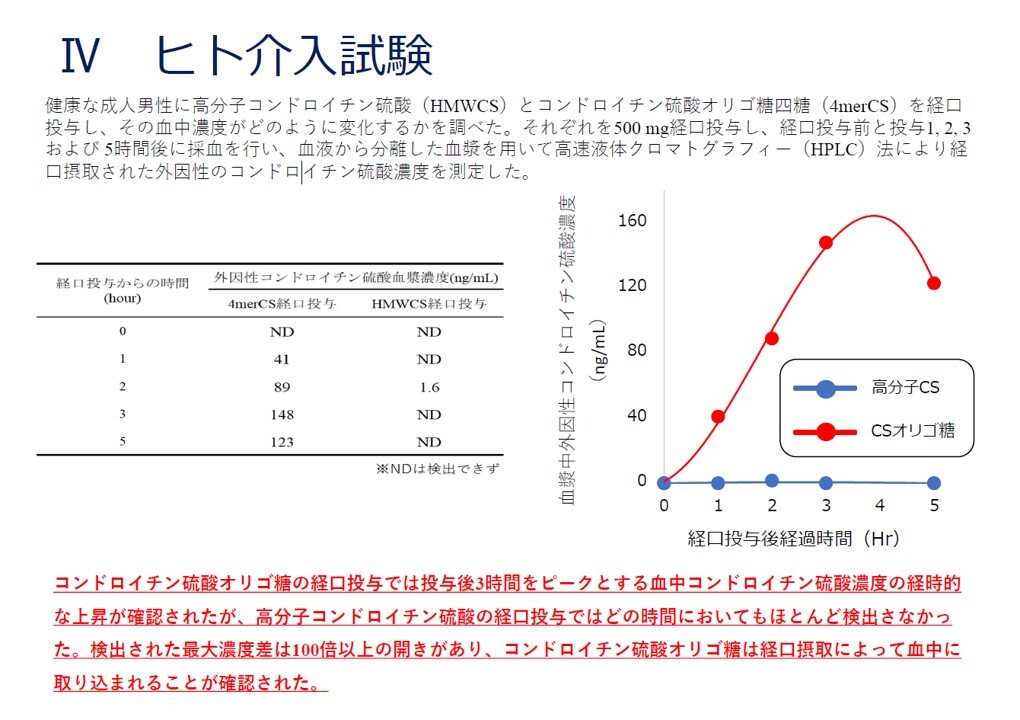
It was found that orally ingested chondroitin sulfate oligosaccharides are absorbed in the intestines and enter the bloodstream, reaching peak blood concentrations 3 to 5 hours after administration and disappearing within approximately 10 hours. Furthermore, it was found that the absorbed molecules are generally 10-saccharides (molecular weight 2,500) or smaller.
On the other hand, as expected, conventional high-molecular-weight chondroitin sulfate was not detected in the blood, indicating that it was not absorbed.
These findings were published in the academic paper by Mizuta, et al, Quantification of orally administered chondroitin sulfate oligosaccharides in human plasma and urine, Glycobiology, 2023;, cwad054, https://doi.org/10.1093/glycob/cwad054.
Chapter 7: The Fate of Oligosaccharides of Chondroitin Sulfate After Oral Ingestion
Food enters the body through the mouth, passes through the stomach, small intestine, and large intestine, and is eventually expelled through the anus. During this process, food is broken down by stomach acid and digestive enzymes, reduced to its constituent molecules or nearly so, and then absorbed.
Small molecules, such as water and minerals, are absorbed as they are.
On the other hand, some foods, such as dietary fiber (cellulose), are difficult to digest and absorb. Since cellulose is made of glucose, it would be a good energy source if it could be digested and absorbed, but unfortunately, that is not the case.
However, even though humans cannot use cellulose as an energy source, herbivores can survive by eating it. Herbivores do not possess enzymes that break down cellulose, but instead, gut bacteria break it down for them, allowing them to survive.
However, gut bacteria do not break down cellulose for the host’s benefit; they do so simply because they want the glucose for themselves. The host then receives whatever remains after the gut bacteria have finished utilizing it.
Because they rely on plants—which are inefficient as energy sources since they cannot be digested by the host and can only be consumed as leftovers—herbivores have long, uniquely shaped digestive tracts and require large quantities of plant matter.
This has gotten a bit long, but the key point is that “even if we lack the digestive enzymes for a particular food, gut bacteria will break it down for us”.
Even without digestive enzymes to break down chondroitin sulfate or proteoglycans, it is sufficient if gut bacteria do the work. In fact, oral administration trials on humans with specific gut microbiota have confirmed an increase in blood levels following the administration of large amounts of high-molecular-weight chondroitin sulfate.
However, as mentioned earlier, gut bacteria break down chondroitin sulfate for their own use, not for the benefit of humans. Therefore, this phenomenon will not occur unless you consume such a large amount of chondroitin sulfate that the gut bacteria cannot fully process it. It will not occur with the amounts typically found in commercially available supplements.
Furthermore, the chondroitin sulfate oligosaccharides produced by the breakdown of chondroitin sulfate by gut bacteria are unsaturated oligosaccharides with a double bond at the non-reducing C4-C5 position. Our research has shown that these unsaturated oligosaccharides are cytotoxic.
The chondroitin sulfate oligosaccharides manufactured by our company are produced through a hydrolysis reaction, so they are all saturated oligosaccharides and are non-cytotoxic.
Chapter 8: Foods Containing Chondroitin
The information online is full of mistakes
On the website of a major health food manufacturer—one you often see in TV commercials—the following incorrect statement was boldly displayed:
2. Foods containing chondroitin
Foods containing chondroitin include chicken skin, cartilage from beef, pork, and chicken, and the shells of shellfish. Additionally, sticky foods like natto and okra are also rich in chondroitin.
What a sloppy article!
When you consider that they sell health foods so aggressively on TV commercials yet lack even this basic knowledge, it’s no wonder that health foods are so hard to trust.
Let me state this loud and clear: natto, okra, and yam do not contain chondroitin.
Just because something is sticky doesn’t mean it’s chondroitin!
Chondroitin is a component unique to animals; plants do not contain chondroitin.
By the way, the sticky substance in natto is polyglutamic acid, while okra, molokheya, and yam contain sugar chains such as pectin, galactan, and glucomannan.
Chapter 9: The Truth Behind the Effects of Chondroitin Sulfate Oligosaccharides—Finally Revealed
~ Why Is Older-Generation Chondroitin Sulfate Ineffective?
Why are ordinary chondroitin sulfate and proteoglycans ineffective? I apologize for repeating myself, but I have written many times that this is because they are not absorbed when taken orally. In other words, substances with a large molecular weight that cannot be digested are not taken up into the bloodstream.
There is a hypothesis that some of these substances are taken up by M cells in the small intestine, but M cells are responsible for taking up antigen-presenting molecules in the intestinal immune system, and they do not absorb enough of these substances to raise blood levels. If that were the case, living organisms would not be able to survive.
Why don’t ordinary chondroitin sulfate and proteoglycans work?
Reason 1
This is because ordinary chondroitin sulfate and proteoglycans cannot cross into the bloodstream and therefore do not reach the cells.
Next, based on the latest remarkable research findings, it has been discovered that chondroitin sulfate oligosaccharides activate Nrf2 and strongly promote the acidification of cytoprotective proteins by increasing the expression of antioxidant response element-dependent cytoprotective genes.
In contrast, no such effect was observed with ordinary chondroitin sulfate, proteoglycans, or hyaluronic acid.
Through many years of research, we have finally concluded that this is the fundamental basis of the functional properties of chondroitin sulfate oligosaccharides.
One of the most well-known cell-protective proteins is heme oxygenase-1 (HO-1). The effects of HO-1 have been reported in numerous scientific papers. Below is a summary of some of these findings.
・Heme oxygenase-1 (HO-1) inhibits osteoclast formation and bone resorption.
https://doi.org/10.1096/fj.05-4278fje
・Elevated levels of heme oxygenase-1 (HO-1) improve conditions such as obesity, hypertension, and vascular diseases.
https://doi.org/10.1016/j.abb.2019.108073
・Heme oxygenase-1 (HO-1) inhibits remodeling after myocardial infarction and restores ventricular function.
https://doi.org/10.1096/fj.05-4435com
・Overexpression of HO-1 protects against TNF-α-mediated airway inflammation by attenuating TNFR1-dependent oxidative stress.
https://doi.org/10.2353/ajpath.2009.090016
・The NRF-2/HO-1 signaling axis: A ray of hope for cardiovascular disease
https://doi.org/10.1155/2020/5695723
In other words, an increase in HO-1 levels is considered to be highly beneficial to the body.
Furthermore, chondroitin sulfate oligosaccharides reach the cells, activate Nrf2 to increase HO-1 gene expression, and actually enhance the production of HO-1 protein.
Why are ordinary chondroitin sulfate and proteoglycans ineffective?
Reason 2
Ordinary chondroitin sulfate, proteoglycans, and hyaluronic acid do not activate Nrf2 and therefore do not increase the production of cell-protective proteins.
Chapter 10: A Bright Future for Chondroitin Sulfate Oligosaccharides
We have finally elucidated that the essential function of chondroitin sulfate oligosaccharides is to activate the transcription factor Nrf2 and strongly promote the production of proteins that protect cells. Our research group is the first in the world to have discovered this fact.
Similarly, Nrf2 is activated when tissues are exposed to oxidative stress or inflammation; cells activate Nrf2 in an attempt to mitigate tissue damage (or, in the worst case, cell death). Nrf2 is also activated by cytotoxic substances.
However, chondroitin sulfate oligosaccharides do not damage cells even at high concentrations and can safely activate Nrf2.
I believe this excellent property stems from the fact that they are carbohydrates, rather than plant-derived alkaloids or polyphenols.
The activation of Nrf2 by chondroitin sulfate oligosaccharides has the potential to promote health for many people.
The essential nature of chondroitin sulfate oligosaccharides is that they are Nrf2 activators.
Chapter 11: The Effects of Chondroitin Sulfate Oligosaccharides
This section describes the benefits of chondroitin sulfate oligosaccharides as experienced by the developer.
It contains absolutely no false information.
1. Maintaining Joint Health (Pain Relief)
Chondroitin sulfate oligosaccharides primarily exert anti-inflammatory effects and alleviate various joint symptoms through a range of mechanisms.
This research was published in a paper in 2018.
Nishimura et al., Daily Oral Chondroitin Sulfate Oligosaccharides for Knee Joint Pain in Healthy Subjects: A Randomized, Blinded,
Placebo-Controlled Study, The Open Nutrition Journal, 12, 10-20 (2018).
2. Prevention of Urinary Tract Stones
Urinary tract (kidney) stones have a high recurrence rate; statistics show that once they occur, more than half of patients experience a recurrence within five years.
Additionally, research has shown that patients with urinary tract stones have lower levels of chondroitin sulfate excreted in their urine.
Chondroitin sulfate oligosaccharides help prevent the formation of urinary tract stones.
3. Prevention of Chapped Hands
In winter, dry conditions and frequent exposure to water make it easy for “chapped hands” to develop.
Dissolving chondroitin sulfate oligosaccharides at a concentration of 1 mg/mL in inexpensive, over-the-counter lotion and applying it to the hands as a moisturizer prevents the occurrence of “chapped hands.”
We believe this improvement is due to the moisturizing and anti-inflammatory effects of chondroitin sulfate oligosaccharides.
4. Prevention of Itching Caused by Dry Skin
Similar to chapped hands, skin tends to become itchy in winter due to dryness.
Applying a lotion containing 1 mg/mL of chondroitin sulfate oligosaccharides alleviates this uncomfortable itching.
Since we believe that “itching” is also caused by mild inflammation, we believe that the improvement is due to the moisturizing and anti-inflammatory effects of chondroitin sulfate oligosaccharides.
5. Skin Symptoms Associated with Shingles
A solution containing 1 mg/mL of chondroitin sulfate oligosaccharides may provide improvement due to its moisturizing and anti-inflammatory effects.
6. Blood Pressure Control
In a human clinical trial conducted in 2023, chondroitin sulfate oligosaccharides were particularly effective in men with hyperlipidemia.
This study was published in a paper in 2025.
Investigation of the Effects of 12-Week Continuous Intake of a Chondroitin Sulfate Oligosaccharide-Containing Supplement on Blood Pressure and Vascular Health in Healthy Adults with Elevated Blood Pressure
—A Randomized, Double-Blind, Placebo-Controlled, Parallel-Group Comparative Trial—
Pharmacology and Therapy Volume 53, Issue 11, 959–972 (2025)
7. Relief of Pain from Heberden’s Nodules
Many people suffer from severe, constant pain in these nodules and often experience stiffness in the joints; however,
chondroitin sulfate oligosaccharides alleviate the pain associated with inflammation even after nodules have formed.
8. Inhibition of Melanin Production
Chondroitin sulfate oligosaccharides have a skin-whitening effect by inhibiting melanin production in melanocytes.
A patent application is pending for these research findings.
9. Eye Health (Maintenance of Vision)
10. Hair Maintenance
11. Improvement in bone density
Chapter 12: What Is Food Safety?
The health hazards caused by K Pharmaceutical’s red yeast rice products, which became a major issue in 2024, were an incident that forced us to reconsider what food safety truly means.
However, this was not a unique occurrence; such incidents have happened repeatedly in the past.
Numerous food-related incidents have occurred, including the PCB scandal, the cadmium scandal, the Kanemi oil scandal, the mustard lotus root scandal, the Snow Brand scandal, the diet pill scandal, the wheat soap scandal, the poisoned gyoza scandal, and the recent spate of O-157 and norovirus outbreaks.
While the causes vary, they can generally be categorized into three types: those stemming from food manufacturers’ production methods or quality control practices; those resulting from a lack of scientific knowledge at the time of the incident; and intentional criminal acts. Criminal acts aside, it is generally believed that all commercially available foods are safe.
However, can we truly say that commercially available foods are absolutely safe?
For example, salt and sugar are essential not only for seasoning but also for human survival.
Yet, consuming too much salt or sugar can lead to various illnesses. High blood pressure and diabetes are prime examples, and these conditions can trigger a host of other health problems.
This applies not only to salt and sugar but to all foods.
In other words, there is no such thing as a completely safe food; overconsumption of anything can be unhealthy. Therefore, food safety is about determining the “safe amount to eat.”
Chapter 13: What Is Chondroitin—Even AI Gets It Wrong
AI has advanced rapidly in recent years, and as a result, it has already become a part of our daily lives. I imagine many of you are using ChatGPT, one of the pioneers in this field, but I decided to ask Gemini—an AI provided by Google—about chondroitin.
The results clearly show that it simply gathered information already available online!
The prime example of this is:
Foods Rich in Chondroitin
■Sticky Foods: Natto, yam, okra, nameko mushrooms.
■Meat and Seafood: Shark cartilage, beef and pork cartilage, chicken skin, shark fin, eel, soft-shelled turtle.
*Since it is difficult to consume sufficient amounts daily through food alone, the use of supplements or pharmaceuticals provided by manufacturers such as Z○○ and S○○ is recommended for efficient supplementation.
It said.
I’ve already discussed this fundamental error in Chapter 8, so I’ll skip it here, but since the general public tends to believe this easily, those providing the information should clearly state that “AI information is not the result of the AI’s own thinking, but merely a compilation of data gathered from the internet.”
Also, is the mention of specific brand names due to advertising fees . . . ?
Incidentally, “natto, yam, okra, and nameko mushrooms” do not contain chondroitin (chondroitin does not exist in plants), and “chicken skin, shark fin, eel, and soft-shelled turtle” contain only trace amounts of chondroitin.